
The cabin of the Santiago to Puerto Montt flight bursts into applause. But not after landing—during the flight. It’s not because of the stunning views, though they are breathtaking, nor due to the pilots' skills, although it does have something to do with the captain. All the passengers are smiling and clapping after hearing the captain over the intercom congratulate his wife on their wedding anniversary and thank her for her patience over the years together.
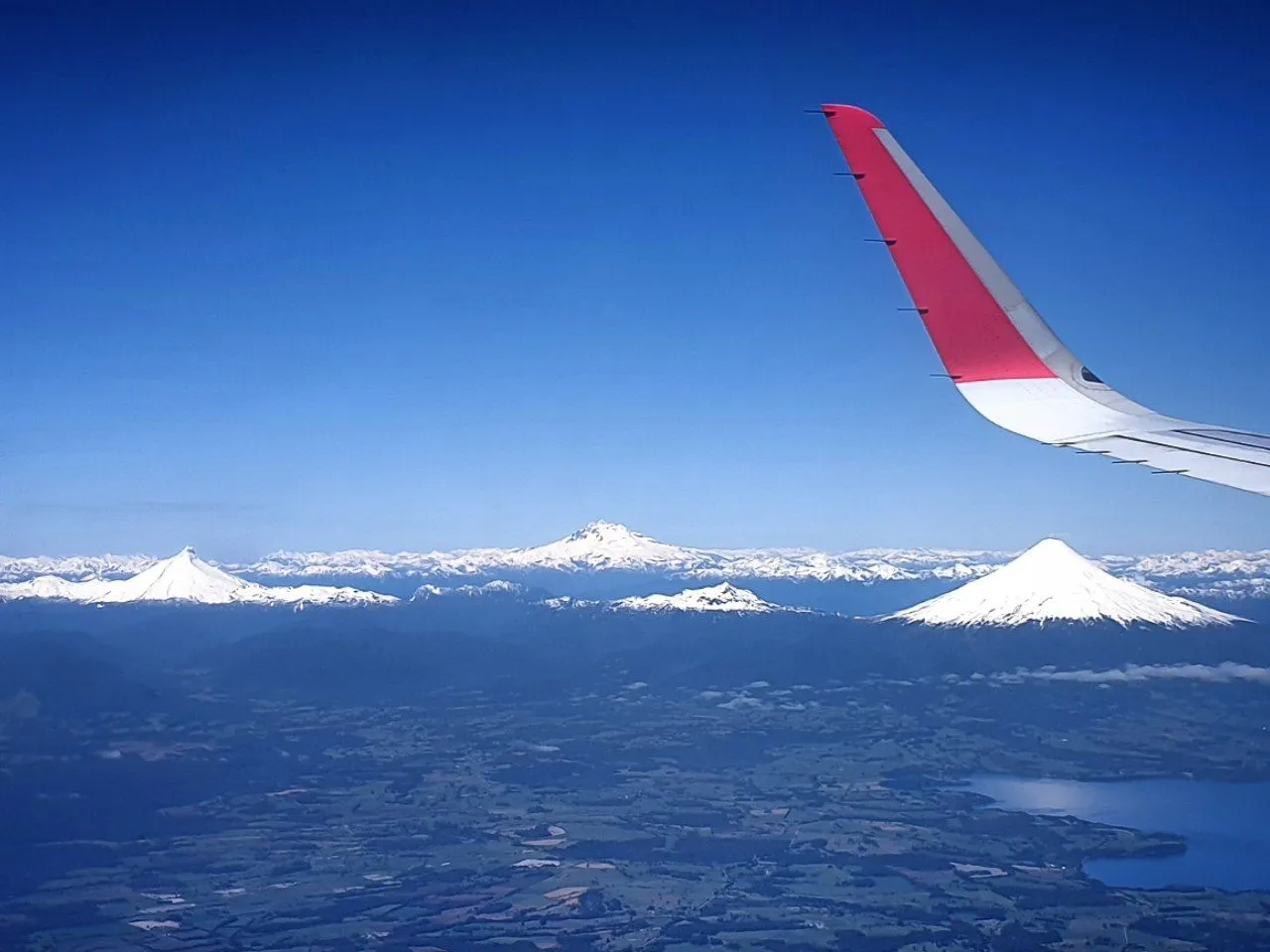
In this sweet and somewhat festive atmosphere, I was returning from Santiago to the volcanoes of Northern Patagonia. The photo shows the view from the plane window as we approached Puerto Montt. I was looking at Osorno, trying to spot tiny people at the summit. They must be up there on such a clear and sunny day. Just a week ago, I was standing on that very summit, gazing at the neighboring volcanoes and the trails of planes in the sunset sky. Now, I was seeing it all from a different angle.
It’s no coincidence that English has the phrase "helicopter view." Flying in planes and observing the earth from several thousand meters up always puts me in the mood for some "bird's eye" reflection on various life matters. It’s an interesting mix of literal and figurative use of the phrase. As my gaze glides over the landscape, matching it with the map and familiar places, neighboring neurons are busy summarizing recent events and decisions, delivering different scenarios for the future.
The plane flies along the Andes, and seeing so many volcanoes, you start to understand why this is part of the Pacific Ring of Fire. For me personally, most of these volcanoes are either memories or future plans.
There’s Villarica smoking in the distance, the first volcano I climbed almost two years ago. It consistently delights photographers in Pucón with its red glow at night, and at the summit, you can fully experience the smell of sulfur and the sounds of the underworld. Beyond it rises Lanín, the giant on the Argentine border—that one's still in the planning stage.
The most beautiful one along my route is Jaima. The plane flies very close to this volcano, giving me a chance to see both its peaks from every side. I’ve been planning to visit this place for a while. Another volcano with smooth slopes dipping into the azure waters of a lake is unfamiliar to me. I make a mental note of its location and shape to figure out how to get there later.
Peering into the Bío-Bío valley, I skeptically recognize the small mountain lakes I hiked to solo last year. Are they really the same ones, or just similar-looking? After that trek, I arrived at the base of Osorno, where I now live and to where I am returning.
There’s the summit of Casablanca, the massive Puyehue, and the road to Argentine Bariloche somewhere between them. If I had binoculars, I could probably even spot the hot springs we soaked in between these two peaks.
Finally, we reach the group of volcanoes near Puerto Montt, distinct in their variety of shapes: Osorno’s cone, Tronador’s crown, and the sharp peak of Puntiagudo. Five more minutes of flight, and the landing gear touches the runway at the airport. At this moment, no one is clapping anymore, and no one is jumping into the aisle too soon either.
Domestic flights in Chile are an unforgettable experience in themselves—if you're lucky with the weather. To see all the mountains and volcanoes of the region, book a window seat in advance: on the left side (A) when flying north to south, and on the right side (F) when flying south to north.