Approval for my Chilean residency didn't come through, and in January, it was time to do a visa run. At that moment, I was in southern Chile and decided to visit neighboring Bariloche while taking in the scenic beauty on the other side of the mountains.
By then, I had spent six months in Chile in a row. Holders of a Russian passport can stay in Chile for 90 days as tourists (no visa required) and then extend their stay for an additional 90 days by applying online and paying a fee of 100 USD. After these initial 180 days, you must leave the country. In theory, as a tourist, you can stay in the country for half a year in a year. In practice, leaving Chile and re-entering shortly afterward (visa run) works well, if you pay for extensions every six months rather than attempting a visa run every 90 days.
I left Chile one day before the deadline. When you enter the country, you receive a paper with the final date of your permitted stay. After the extension, they send a file with the updated date. You need to show it when boarding the bus and at the border. Printing is not obligatory; I showed it on my phone screen. For leaving Chile, you only need your passport and this paper. For entering Argentina, you need your passport and the address of your stay in Argentina. No need to show reservations; they only ask for the address, which they enter into the system. I usually just show a screenshot of the address on Google Maps, as dictating it isn't reliable.
Buses from the AndesMar company operate between Chile and Argentina through this border. The starting point in Chile is Puerto Montt, and the final destination in Argentina is Bariloche. The bus stops in Osorno, Chile, and Villa la Angostura, Argentina. Angostura is much closer to the border, and it's an additional 2 hours to Bariloche. So, if your only goal is a visa run, you can stop there.
❗️Tickets can be purchased here:
https://www.andesmarchile.cl/en
One-way ticket price is 40,000 CLP.
I recommend buying them a few days in advance, as tickets sell out, and there are no available seats on the same day.
Unlike Chile and many other countries, a visa run does not work in Argentina. Border officials meticulously count the days you can spend in their country and manually record it next to the entry stamp in your passport. In my case, a five-person committee convened twice for half an hour each time to accurately calculate my days, considering my previous entries into Argentina.
After three days in Bariloche, I returned to Chile. The bus drivers were the same, they recognized me, and we chatted, but there were no questions about my suspiciously quick return. At the Chilean border, they said "Hola!" stamped my passport without looking, and printed a new paper for another 90 days. They didn't even ask for my address in Chile - they just put down the city the bus was heading to, Puerto Montt.
To enter Chile, besides your passport, you'll need a small declaration. You can fill it out online in advance or on the way and show the file on your phone screen. If you haven't done this, they'll give you a paper form on the bus.
❗️Link to fill out the declaration online:
https://djsimple.sag.gob.cl/etapas/ejecutar/22431500
My ticket was to Osorno, but I got off in a small town along the way - Entre Lagos. One advantage of Chilean buses is that they are always willing to stop at the right place on the road if you warn them. So at the border, I approached the driver, we agreed, and he moved my backpack to the luggage compartment closer to the exit.
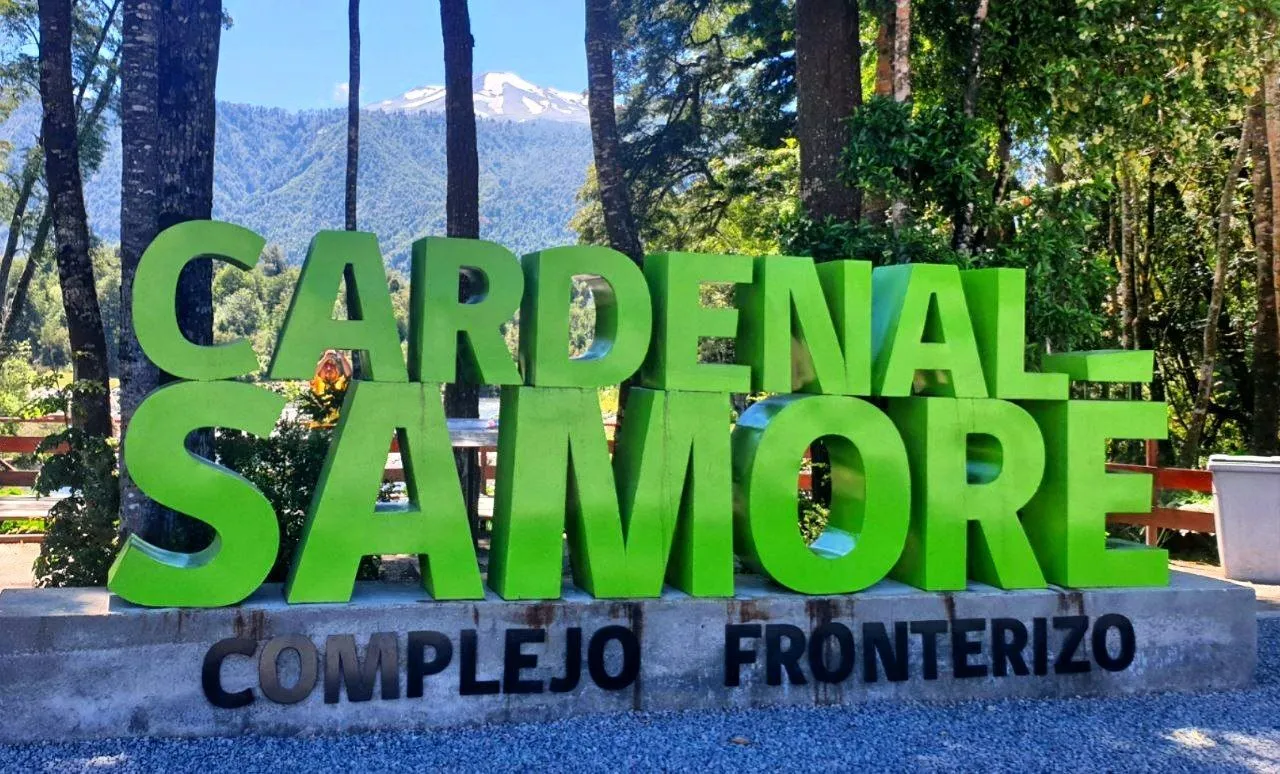
The border between Chile and Argentina in Patagonia is probably the most beautiful border in the world. The serpentine road winds through mountains, volcanoes, rivers, and lakes. All of this is the territory of national parks, and between the border checkpoints of the two countries is an hour's drive by car. I really want to ride there on a bicycle someday and appreciate this unique place more thoughtfully.