The thousands of red torii gates climbing up Mount Inariyama are probably Kyoto’s most recognizable landmark. Tourists pour terabytes of photos into Instagram, yet it’s nearly impossible to capture a frame without a dense procession of heads from all over the world streaming through the shrine paths.
We did the same daytime loop with the crowds, got a sense of the park’s real scale—and decided to come back at night.
We did the same daytime loop with the crowds, got a sense of the park’s real scale—and decided to come back at night.
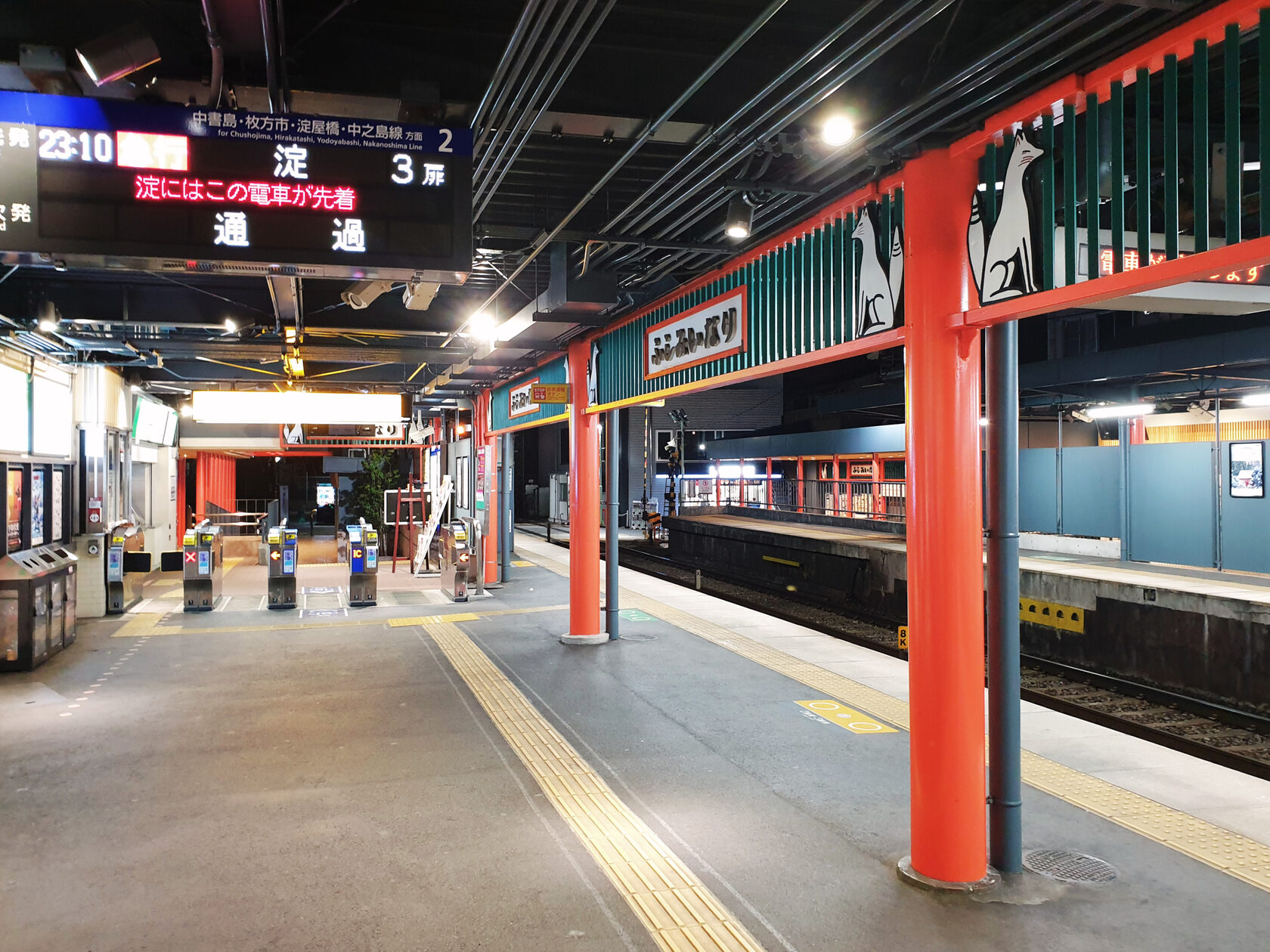
After sunset, the atmosphere changes completely. As soon as you step off the train, you’re greeted by foxes: the messengers of Inari, the deity worshipped at this shrine. During the day I barely noticed the themed design, but when you arrive on the last train, it suddenly feels as if those fox spirits peel off the walls, hop onto the platform, and quietly walk beside you, escorting you toward the realm of the kami.
Kami
In Shinto, a kami isn’t a single god but anything “greater than us”: the spirit of a mountain, a forest, a river, a place, a family line, or someone who once lived. It expresses the idea that the world has its own character and force—something you can build a relationship with through respect, small rituals, and quiet requests for health, luck, and protection.
The sacred mountain begins almost immediately after you exit the station. The red torii mark the threshold into the shrine’s space. During the day I rushed under the first bright-red arch with my phone glued to my hand, swept up by the general frenzy and hoping to catch a good photo. But now I let myself fully feel the shift—stepping across the “boundary” between worlds, trying, in the Shinto spirit, to let go of everyday thoughts and begin my sando, the pilgrim’s path to the heart of the main Inari shrine.
Sandō
The sando is the walkway from the outer torii into the shrine—a ritual path that guides you through its symbolic elements and gradually shifts your mind from the ordinary to the sacred.
Although with Inari, detaching from the mundane is debatable. Over a thousand years, this deity has had quite a career: from guardian of rice harvests to patron of all business and prosperity. A night trek up the mountain becomes a kind of practical meditation on wealth.
But then the fox statues, holding bundles of rice in their mouths, look at me with their sly, half-smiling expressions, inviting me to drop all rational thoughts and simply accept the placebo of ritual—believing, for a moment, that a bit of good fortune might actually rub off.
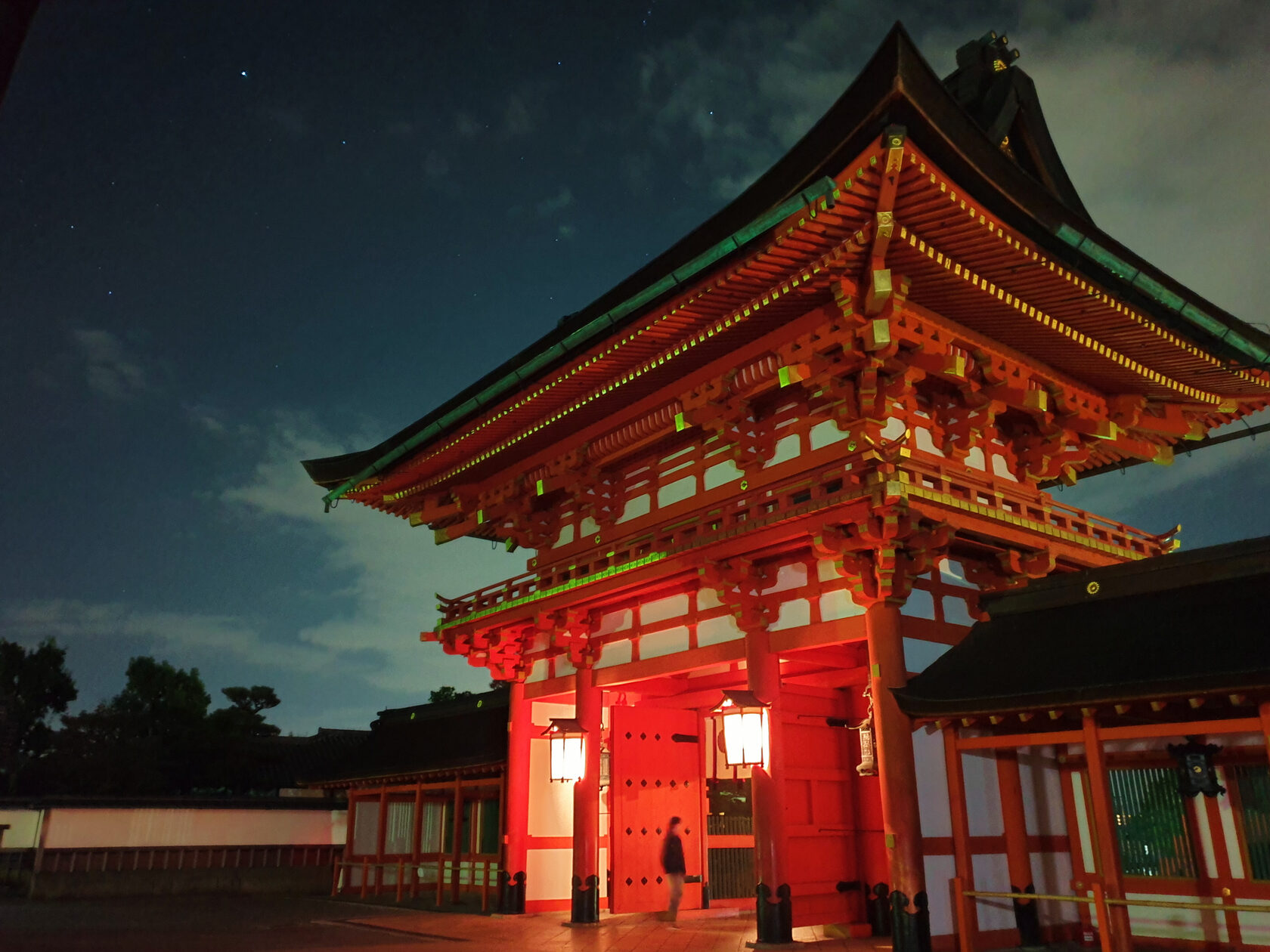
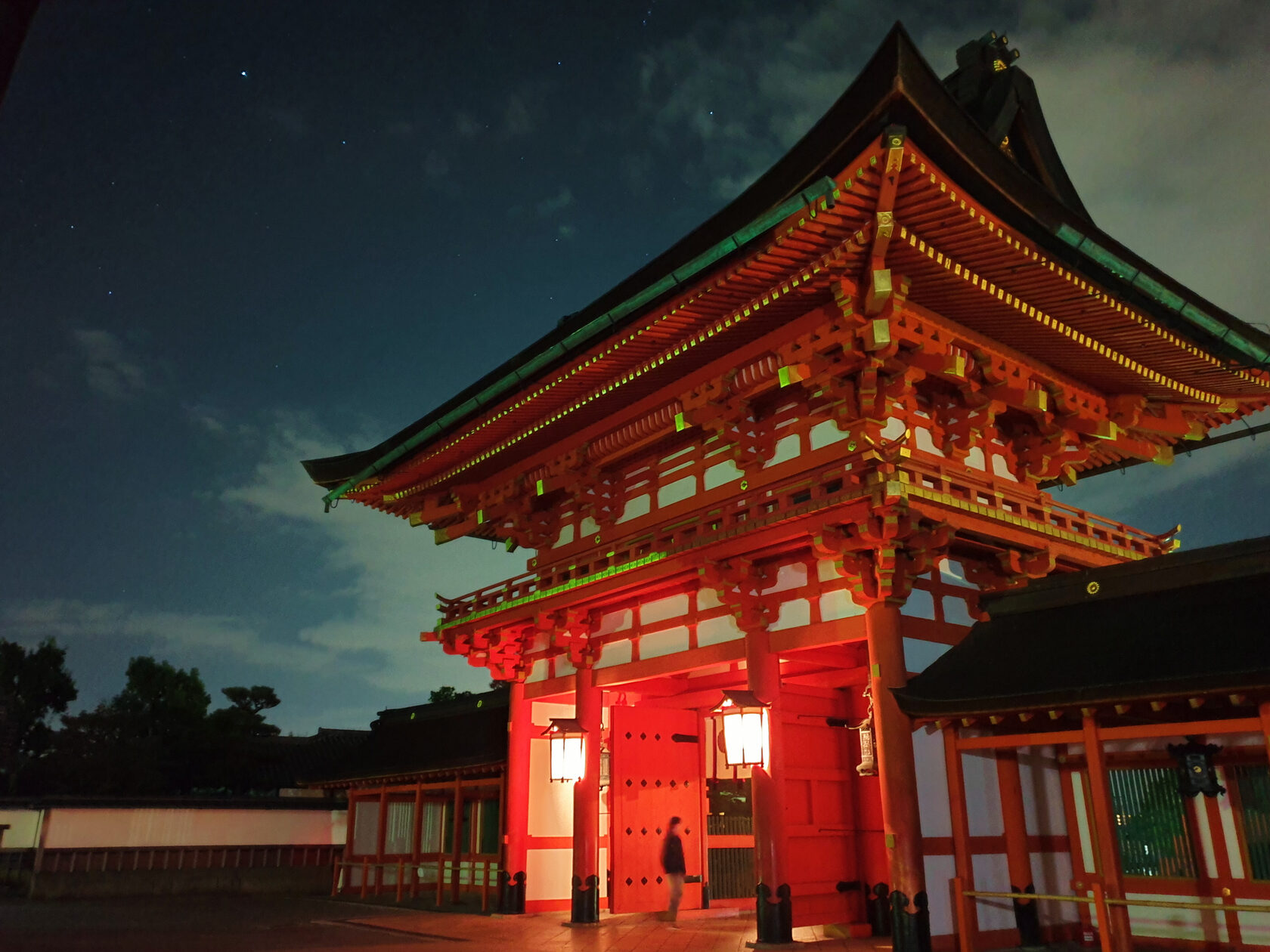
We pass through the Romon, the grand two-story gate of the main shrine. Under the starry sky, lit only by traditional lanterns, it feels far more majestic than during the day. The vast courtyards are empty, and it feels almost illicit—as if we’ve entered a private domain of the spirit of this place after hours, catching a glimpse of something not meant for outsiders.
But then the fox statues, holding bundles of rice in their mouths, look at me with their sly, half-smiling expressions, inviting me to drop all rational thoughts and simply accept the placebo of ritual—believing, for a moment, that a bit of good fortune might actually rub off.
We pass through the Romon, the grand two-story gate of the main shrine. Under the starry sky, lit only by traditional lanterns, it feels far more majestic than during the day. The vast courtyards are empty, and it feels almost illicit—as if we’ve entered a private domain of the spirit of this place after hours, catching a glimpse of something not meant for outsiders.
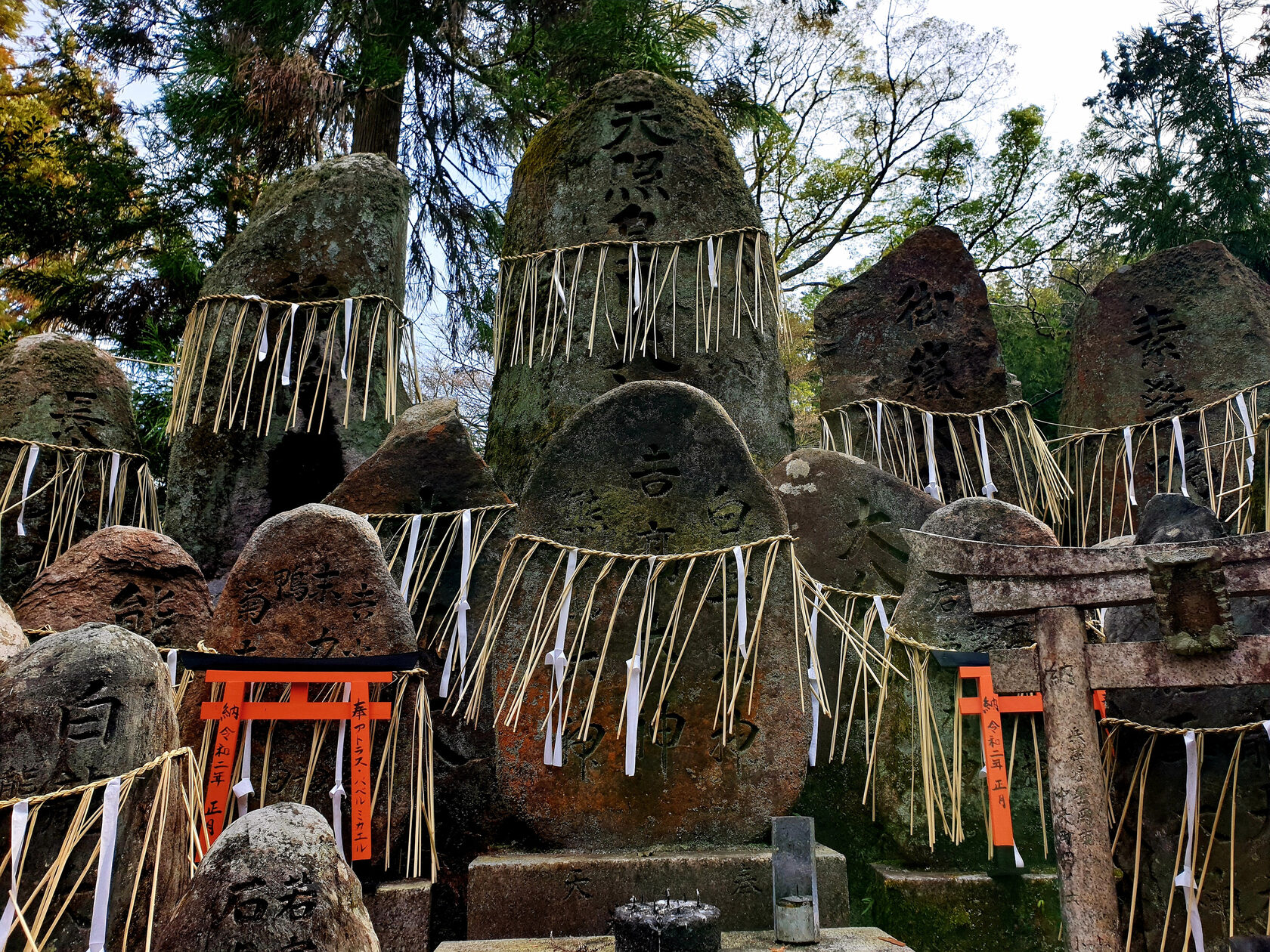
Beyond the open courtyards, the tunnels of torii begin. At first there’s some overhead lighting, then a few scattered lanterns, and soon only the moon and the stars remain. We occasionally step off the main path into dense bamboo thickets or stumble upon piles of roughly carved stones. They’re covered in inscriptions, and for a moment you assume these are the oldest things on the mountain. But the practice of placing otsuka—stone altars offered to the sacred mountain—only took shape in the late 19th century. The custom of donating torii is older by two or three centuries, and today it’s clearly at its peak: countless people, companies, and even multinational corporations sponsor their own engraved gates in gratitude or in hope of success. And if you don’t have a spare five to ten thousand dollars for a full torii, you can buy a palm-sized version and leave it in designated spots on the mountain, adding your wish for prosperity to the thousands already there.
Otsuka
Otsuka are small stone altars placed on sacred ground—like Mount Inari. They’re inscribed with the name or aspect of the deity, and people leave miniature torii beside them. It’s a way of literally marking a personal prayer or thank-you in a place where it can remain for years.
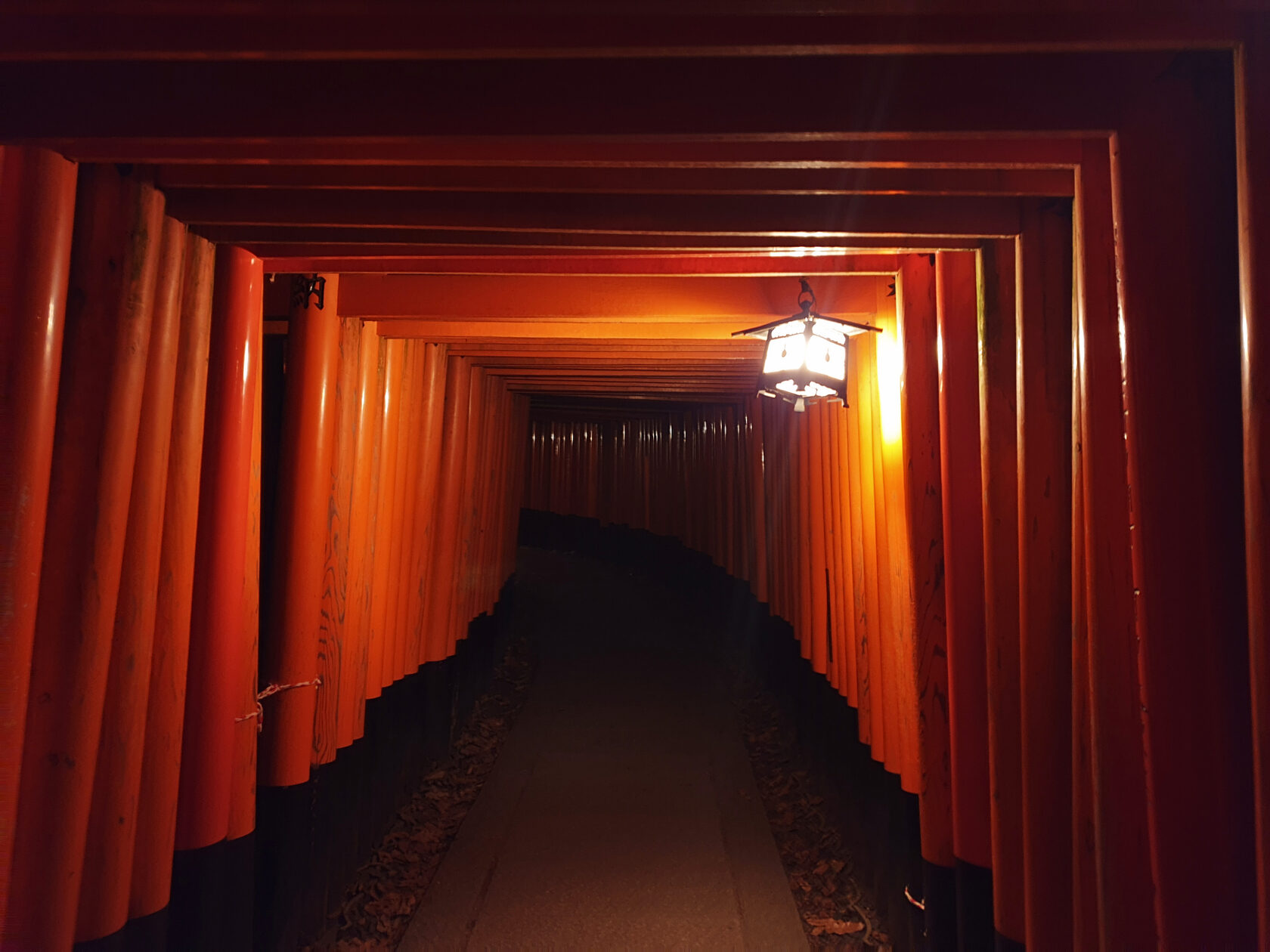
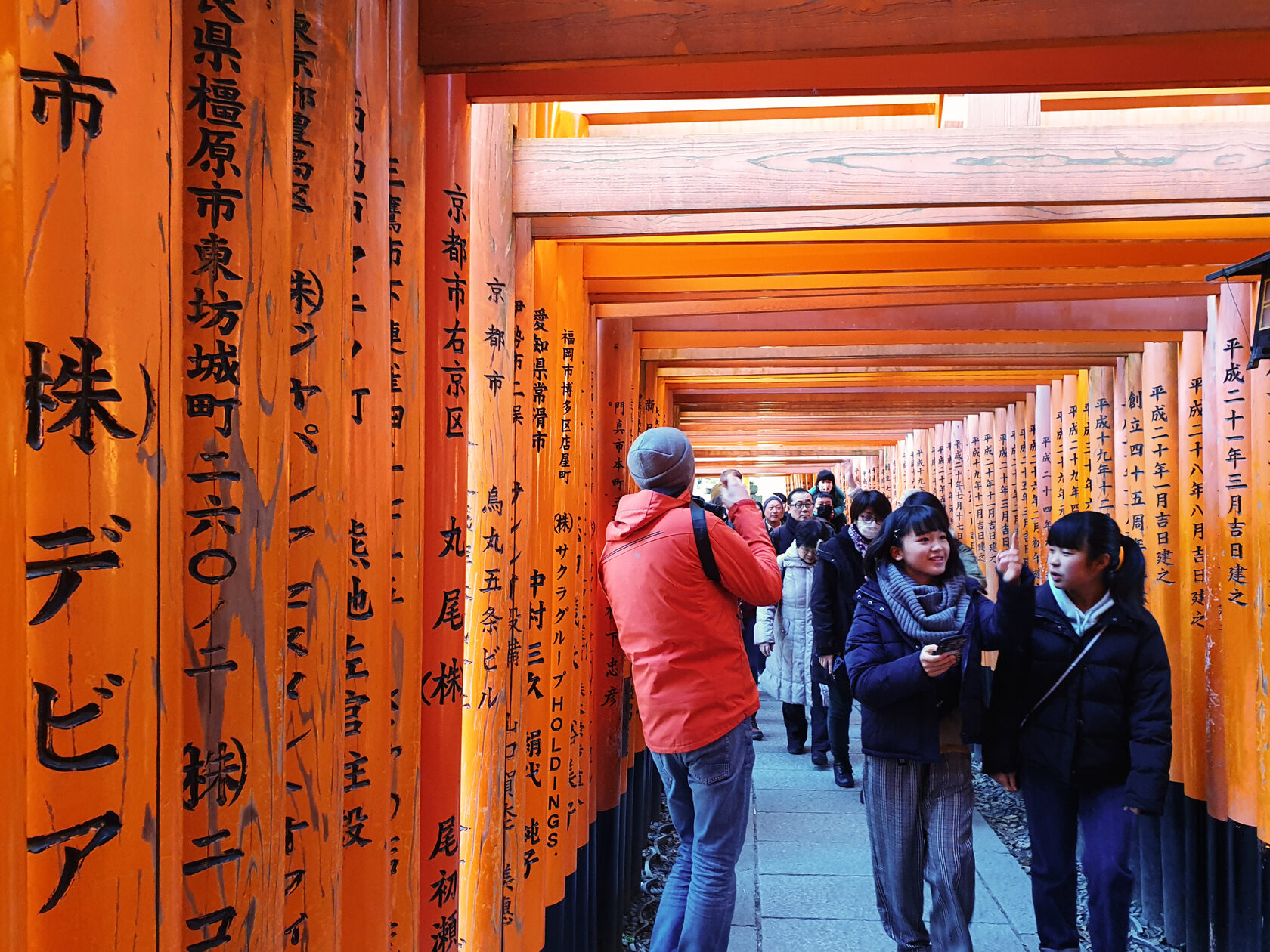
Wooden torii don’t last long. When you run your fingers along the smooth beams carved with characters, you’re not touching ancient scripture but reading the names of donors—most gates are no more than a decade old. They’re constantly replaced; new names appear as old ones fade. But this doesn’t make the place any less ancient.
What’s truly old here is the ritual. Since the 8th century, Mount Inariyama has been seen as a place where the Inari kami dwells. People walk the sando route, give thanks for their successes, and ask for future ones—whether it’s a rice harvest or a race for leadership in microelectronics. In Shinto, it’s the form and ritual that matter, not the age of the wood. By renewing the physical structures, the Japanese preserve the design and intention with remarkable care.
Eventually we pass through another set of red gates and emerge onto an open platform near the summit, with a sweeping view of Kyoto glittering below. A perfect spot for our own not-exactly-pious ritual: opening a bottle of wine with a beautiful view. We toast with local plum wine, predictably wishing to return to Japan. It feels like a symbolic transition—from a meditative Kyoto of tradition to the Kyoto of new, unexpected adventures.
Having already stepped outside the bounds of the usual tourist rhythm, we decided to keep going and slip into the city through a “back door.” Instead of descending via the main shrine route, we searched for a direct trail into another part of Kyoto through the night forest. And we actually found an official path leading down to a quiet neighborhood of tall fences and houses belonging, judging by appearances, to the city’s more prosperous residents. They probably bring offerings to Inari regularly—perhaps on their morning runs up the sacred mountain.
Here on the map is the alternative route down from Mount Inari.
What’s truly old here is the ritual. Since the 8th century, Mount Inariyama has been seen as a place where the Inari kami dwells. People walk the sando route, give thanks for their successes, and ask for future ones—whether it’s a rice harvest or a race for leadership in microelectronics. In Shinto, it’s the form and ritual that matter, not the age of the wood. By renewing the physical structures, the Japanese preserve the design and intention with remarkable care.
Eventually we pass through another set of red gates and emerge onto an open platform near the summit, with a sweeping view of Kyoto glittering below. A perfect spot for our own not-exactly-pious ritual: opening a bottle of wine with a beautiful view. We toast with local plum wine, predictably wishing to return to Japan. It feels like a symbolic transition—from a meditative Kyoto of tradition to the Kyoto of new, unexpected adventures.
Having already stepped outside the bounds of the usual tourist rhythm, we decided to keep going and slip into the city through a “back door.” Instead of descending via the main shrine route, we searched for a direct trail into another part of Kyoto through the night forest. And we actually found an official path leading down to a quiet neighborhood of tall fences and houses belonging, judging by appearances, to the city’s more prosperous residents. They probably bring offerings to Inari regularly—perhaps on their morning runs up the sacred mountain.
Here on the map is the alternative route down from Mount Inari.
Winding through the city toward the center, we passed through questionable alleys by the railway tracks, quiet residential streets, and even a small playground—where we discovered the first non-high-tech toilet of our entire trip. In Japan even the trains have musical, heated, multi-button toilets, so this one felt almost exotic.
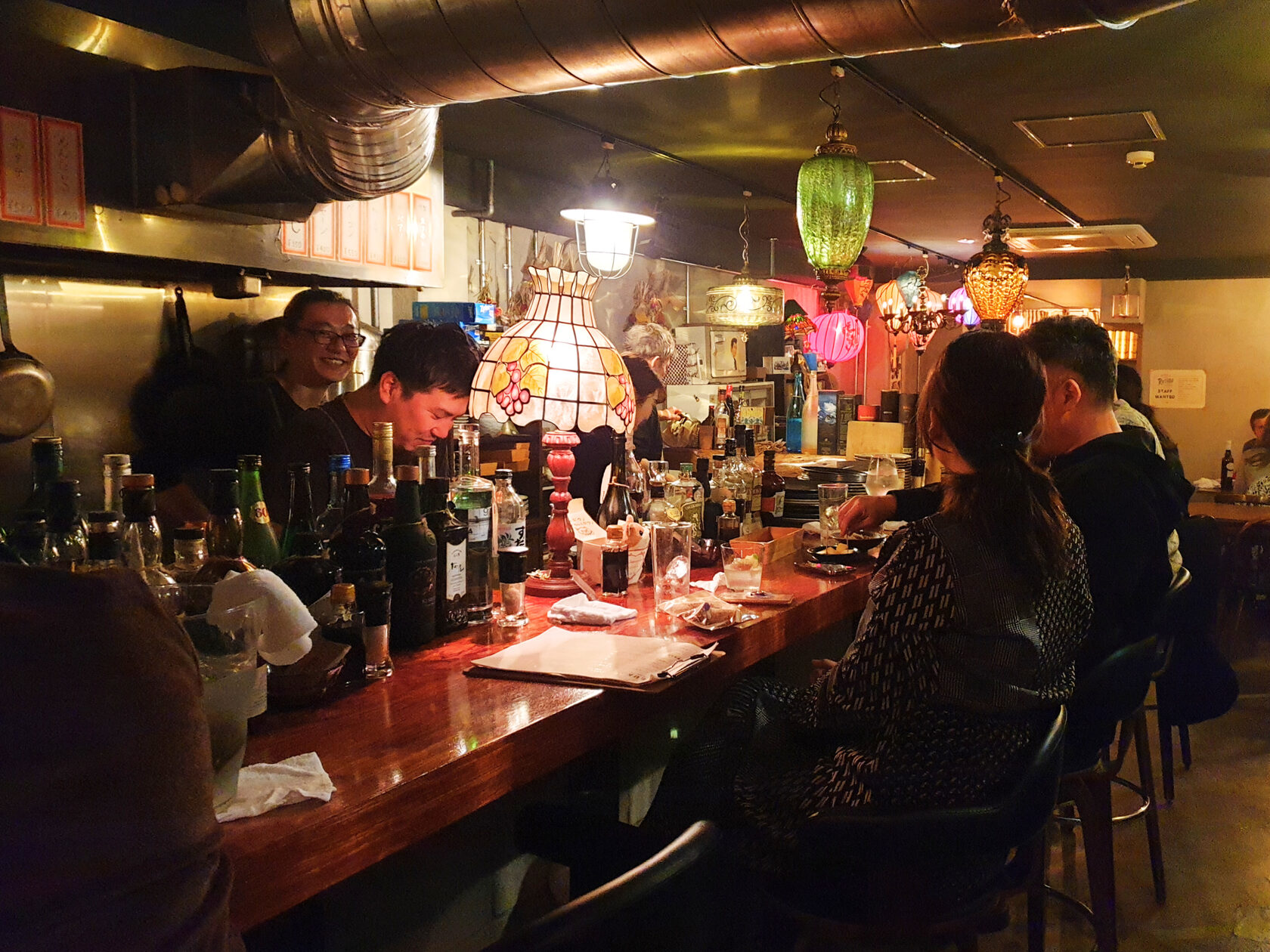
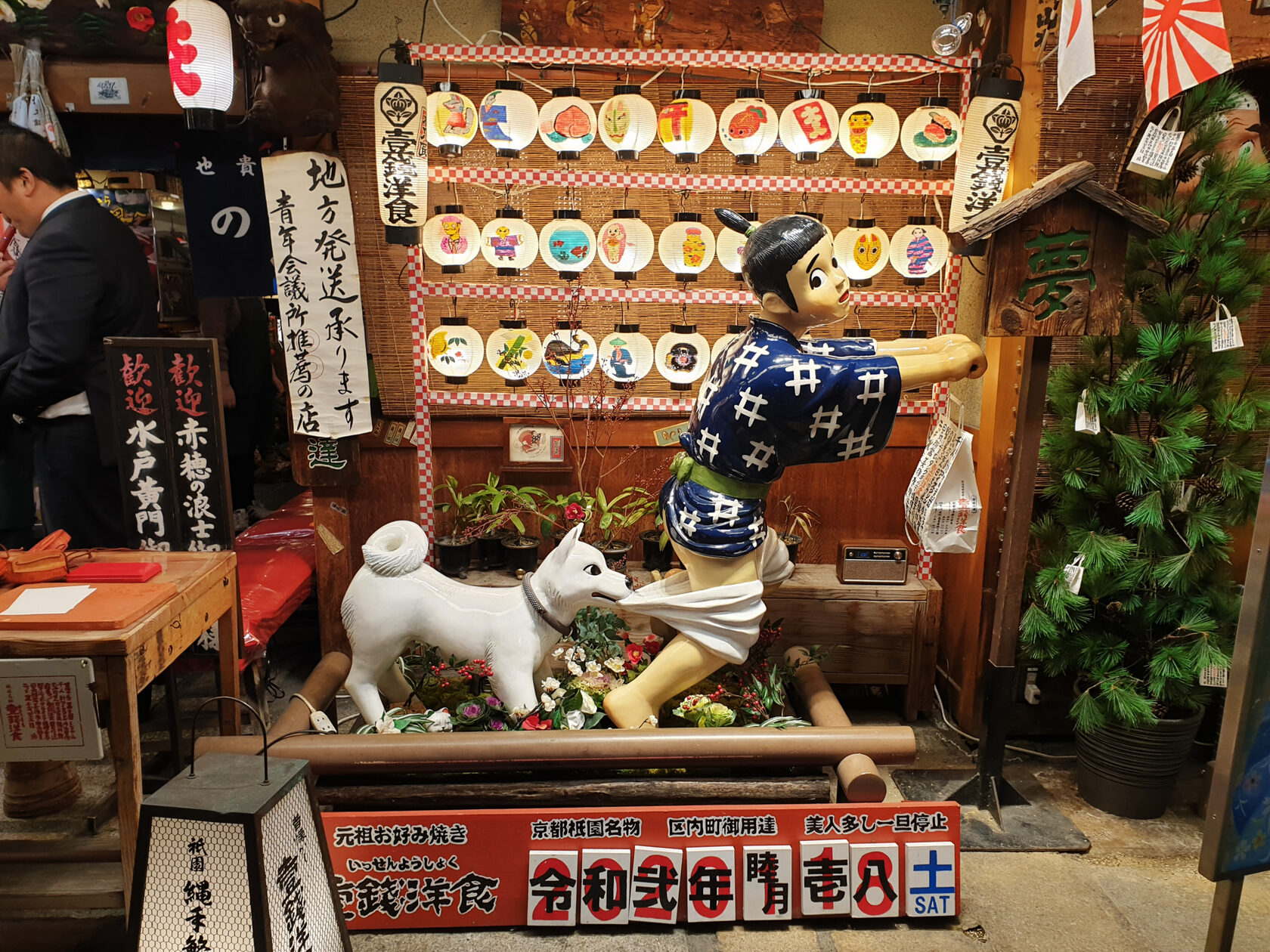
After looping through Kyoto—through thousands of torii and dozens of neighborhoods—we returned to the tourist center. We wandered through the lively streets of food stalls and souvenir shops and finished the night with a final sake in a tiny home-style bar, one of many in the area. And this walk ended up being one of the brightest memories of all my travels.
After looping through Kyoto—through thousands of torii and dozens of neighborhoods—we returned to the tourist center. We wandered through the lively streets of food stalls and souvenir shops and finished the night with a final sake in a tiny home-style bar, one of many in the area. And this walk ended up being one of the brightest memories of all my travels.
Subscribe to the Crossing Borders channel on Telegram to read more stories from Japan —and beyond.